 DREAMVAULT
During the coldest week since winter began, the snow fell thick and fast, pressing even the moonlight into a pale grey sheet.
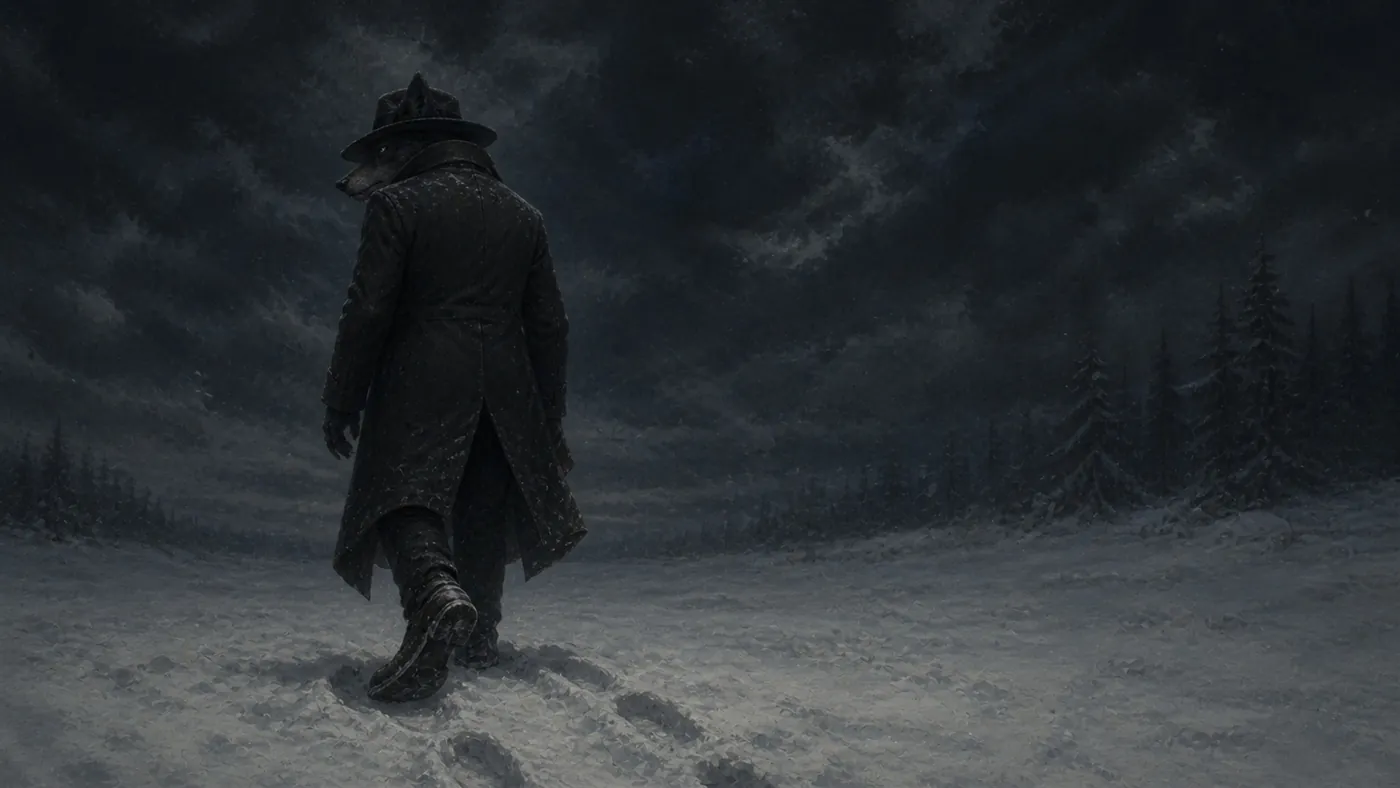
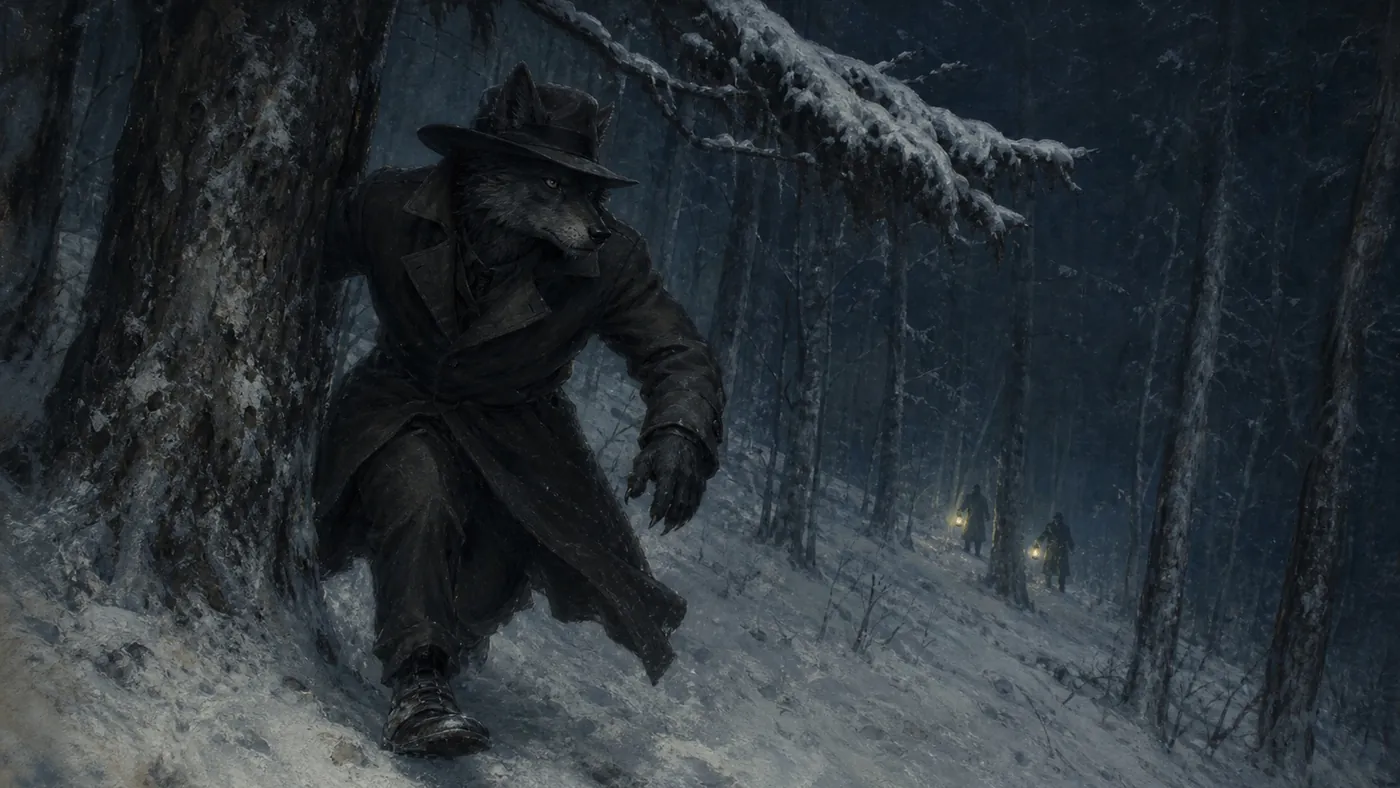
Marlow raised the collar of his coat, lowered the brim of his hat, and hurried toward the mill on the hill. He forced himself to remain upright, fighting the urge to put his forepaws back on the ground and run on all fours. As long as there was anyone nearby who might see him, he could not run that way.
That afternoon in the council hall, he had personally urged everyone to accept the curfew.
“Only three days,” Marlow had said from the platform. “Every wolf will leave the city before dark. Things will soon settle down.”
Now darkness had fallen long ago, and he was still inside the wall.
The snap of a breaking branch came from the distant forest. Marlow immediately slipped behind a large tree and listened with his head tilted. There were at least two people: one with heavy steps, the other stopping every few paces as though searching for something.
“Shoot as soon as you find him,” someone said.
“The orders say they want him alive.” The other voice was closer.
“If he’s dead, he’s still been found.”
Marlow pressed his back against the cold trunk and slowly breathed out. That afternoon, he had promised the humans that the wolves would obey the rules. If anyone saw him outside tonight, someone in the council hall would say tomorrow: See? We gave them rules, and they still refuse to follow them.
It had taken the wolves nearly a hundred years to obtain a handful of permits allowing them into the city during daylight. He could not let those permits be destroyed by his own actions.
A point of wavering firelight appeared behind the tree.
“There are shoe prints here.”
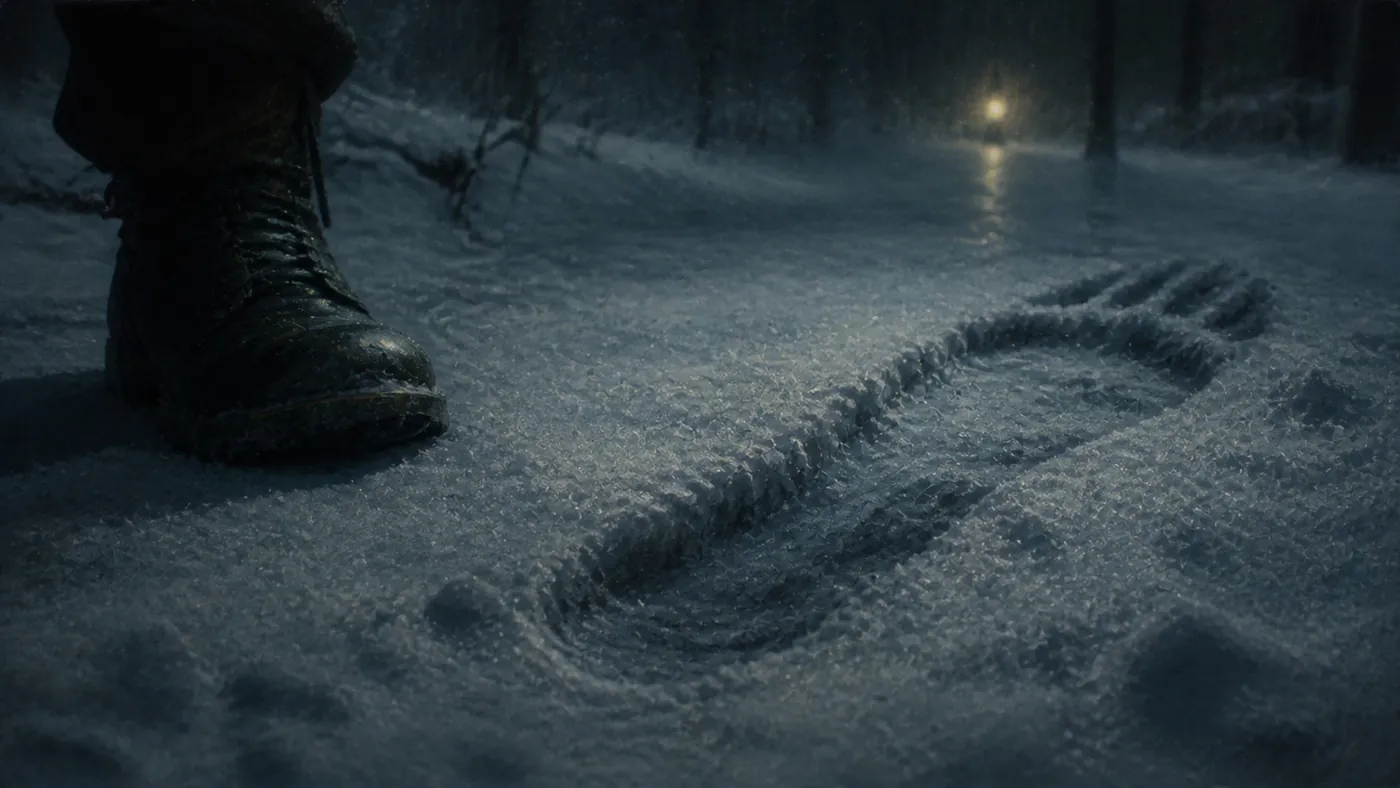
Marlow looked down. The tracks in the snow were long and wide. No one needed to measure them to know that no human shoes had made them. The city required every wolf with a permit to wear shoes in the name of decency, yet not one shoemaker had ever made a pair that truly fit a wolf’s paws.
“They lead uphill.”
The two woodsmen stopped. Firelight slipped through the branches, briefly catching Marlow’s sleeve before the falling snow concealed it again.
He looked downhill. A frozen creek ran along the bottom of the slope. The water had not frozen completely, and several black stones still rose above its surface.
Marlow burst from behind the tree and deliberately drove his heels deep into the snow.
“There!”
A musket fired. The shot broke a branch above his head, sending a sheet of snow down the back of his collar. Marlow did not look behind him. He ran downhill until thin ice began to crack beneath his feet.
He jumped onto the stones beside the creek, pulled off his shoes, and hurled them downstream. They slid across the ice and crashed into a thicket covered in snow.
The woodsmen’s footsteps were already coming down the slope.
Marlow put his forepaws back on the ground.
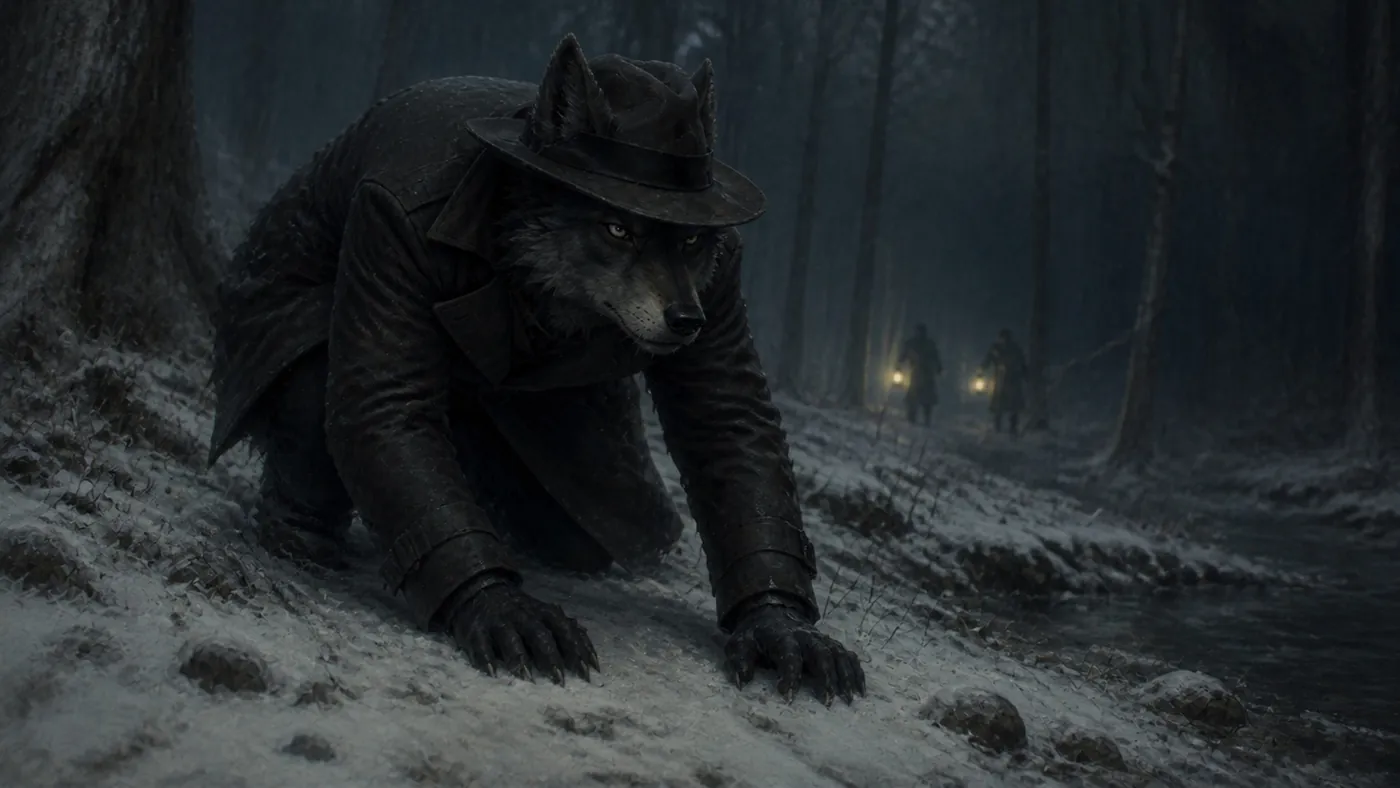
The moment his shoulders dropped, he nearly gasped aloud. All four legs knew how to move without needing to be told. He crossed the stones above the water, doubled back into the forest along the creek, then raced uphill beside roots where no snow had settled.
Someone behind him shouted, “The shoes are down here!”
The other man cursed, and the two lights continued downhill.
Marlow did not stop. He ran deeper into the forest until he could no longer hear the woodsmen. Only then did he stand upright again and hide his mud-soaked forepaws inside his sleeves.
The mill stood at the top of the hill, a weak yellow light shining through its window.
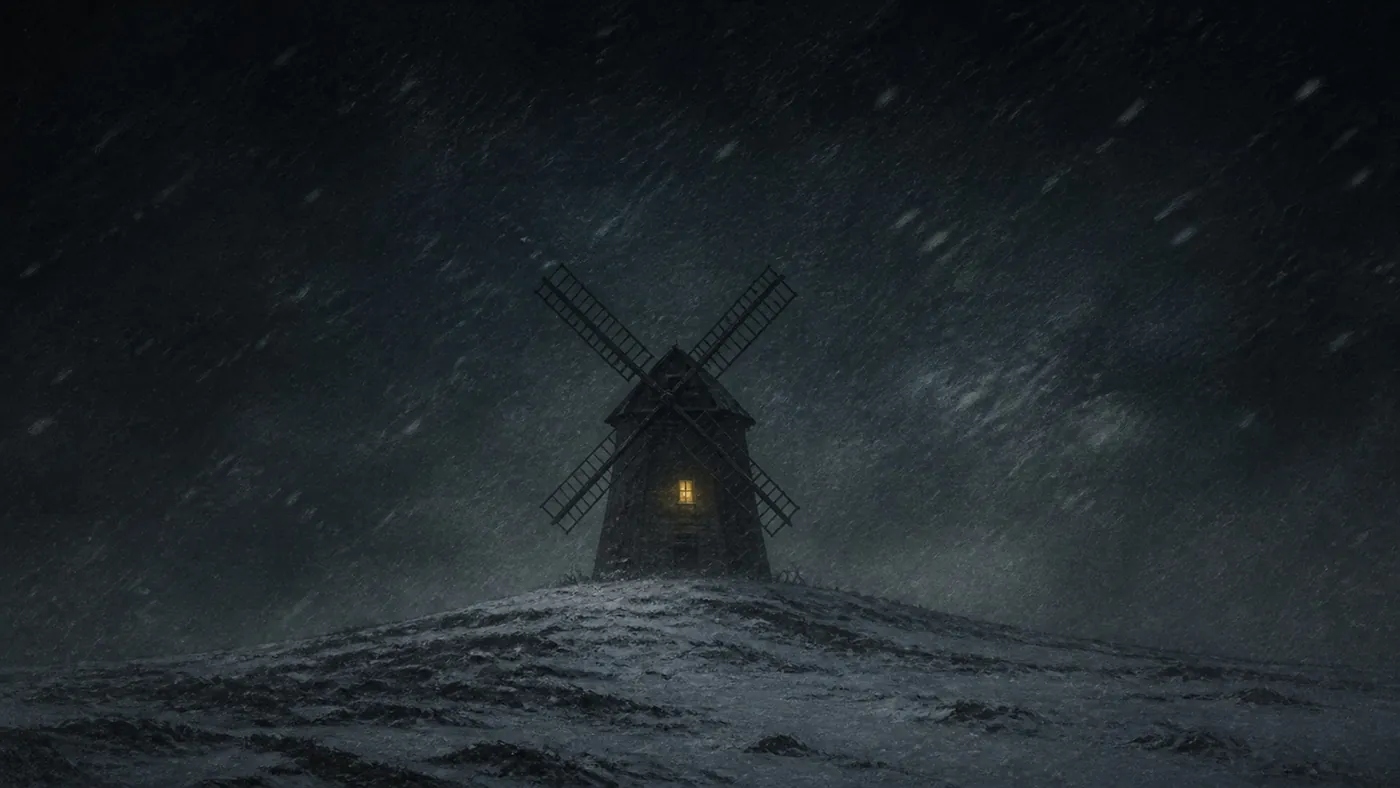
It was Agnes’s home.
Marlow knew she was not there that night. On this day each week, Agnes went into the city and worked late at the bakery, leaving her seven children in the mill. Several months earlier, the humans had invited her to the council hall and placed her on the platform to say that sheep could live well outside the wall as long as they worked hard and obeyed the rules. That was when Marlow had met her.
After her speech, she had stepped down from the platform and quietly told him that she worked two shifts every day and still often had no idea where she would borrow the flour for the following month.
There was nowhere outside the house where a person could hide. Sooner or later, the woodsmen below would discover that the shoes were only a decoy and follow the creek back uphill.
Marlow climbed the wooden steps of the mill and knocked on the door.
The voices inside stopped at once.
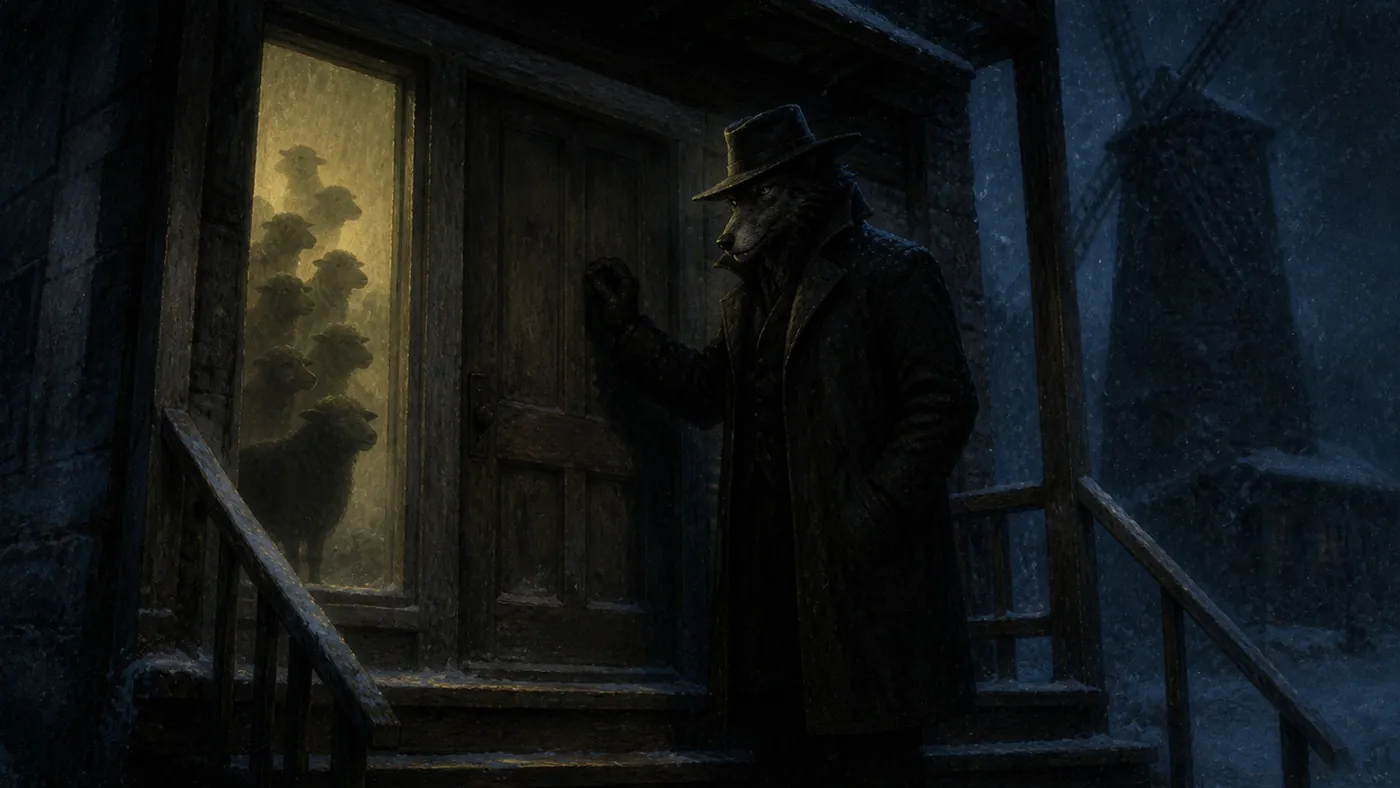
“Who is it?” a girl asked from behind the door.
“It’s Marlow,” he said, lowering his voice. “I know your mother. There are people outside looking for me. Let me hide in there, and I’ll be gone before morning.”
The other side of the door was quiet for a moment.
“Mama said we aren’t allowed to open the door.”
“I won’t hurt you. I only need to stay for a little while.”
“No,” another child said. “We can only open it when Mama comes home.”
Marlow looked back down the hill. Firelight had reappeared deep among the trees—two more lamps than before. The woodsmen had discovered something was wrong and were turning back.
He knocked again.
“Listen to me. I saw your mother only this afternoon. She knows who I am.”
“Then go find her.”
The children’s voices were small, but their answer left no room for negotiation.
Marlow looked up at the illuminated window. In only a few minutes, the woodsmen would see the light as well. They would search the mill first, then drag him back into the city. By tomorrow, no one would remember what he had said that afternoon. They would remember only that a wolf who preached obedience had been caught outside after curfew.
Several sacks of flour, not yet carried indoors, were stacked beside the wooden steps. A short piece of bookkeeping chalk hung on the wall.
Marlow stood without moving.
He needed only to survive the night. At daybreak, he would leave. The children would lose nothing, and no harm would come to them.
He reached into a sack, took a handful of flour, and slowly rubbed it over one forepaw. The black fur disappeared beneath it, though a few uneven clumps of white powder remained around his knuckles.
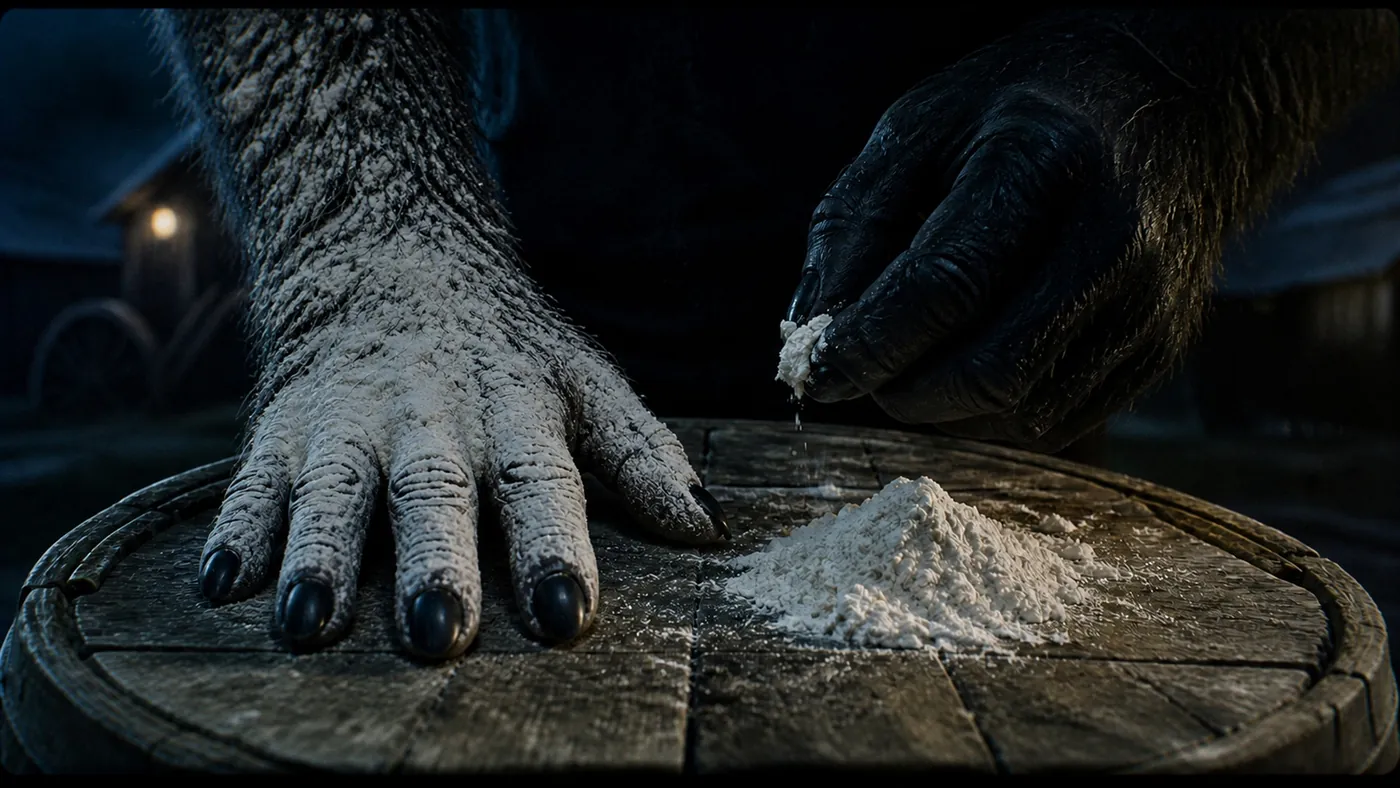
Then he took the chalk from the wall and bit off a small piece. The powder clung to his tongue, bitter and dry. He swallowed several times and recalled the sound of Agnes speaking in the council hall.
Marlow knocked once more.
“Children, it’s me.”
No one behind the door answered.
He made his voice softer and a little more tired.
“It’s so cold outside. Hurry and open the door for Mama.”
A chair immediately scraped across the floor inside.
“Wait,” said the eldest child. “Put your hand through first.”
The door opened by only a narrow crack.
Marlow crouched and pushed his flour-covered forepaw into the room. Several children gathered behind the door and whispered to one another.
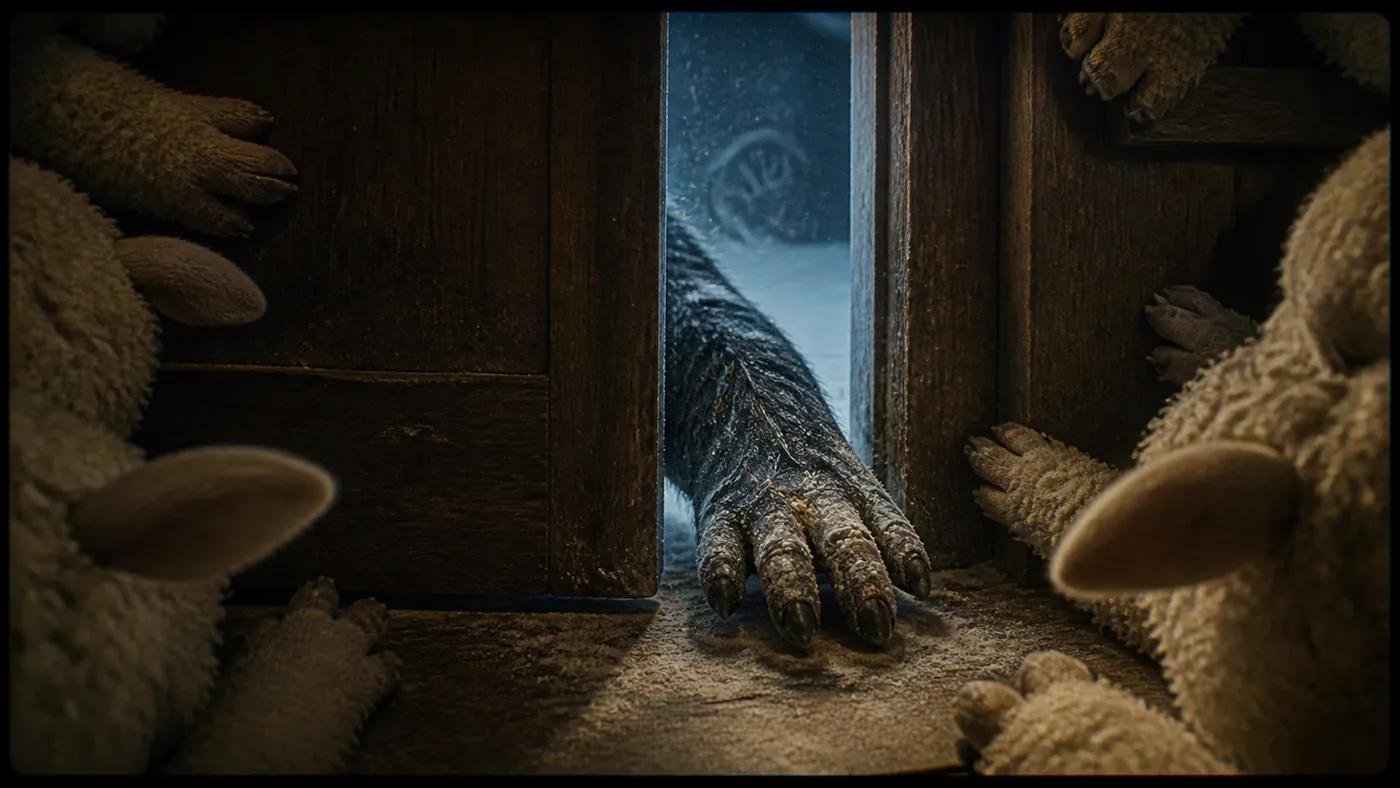
“It’s white.”
“But there’s powder here,” another child said.
“Mama was baking today. Of course there would be flour on her hand.”
Marlow heard the latch being lifted.
He told himself that all he had to do was enter, close the door, and wait quietly until morning. Then it would all be over.
The wooden door slowly opened inward.
The girl standing at the front looked up. She saw beneath the brim of the hat a face that did not belong to her mother, and her whole body went still.
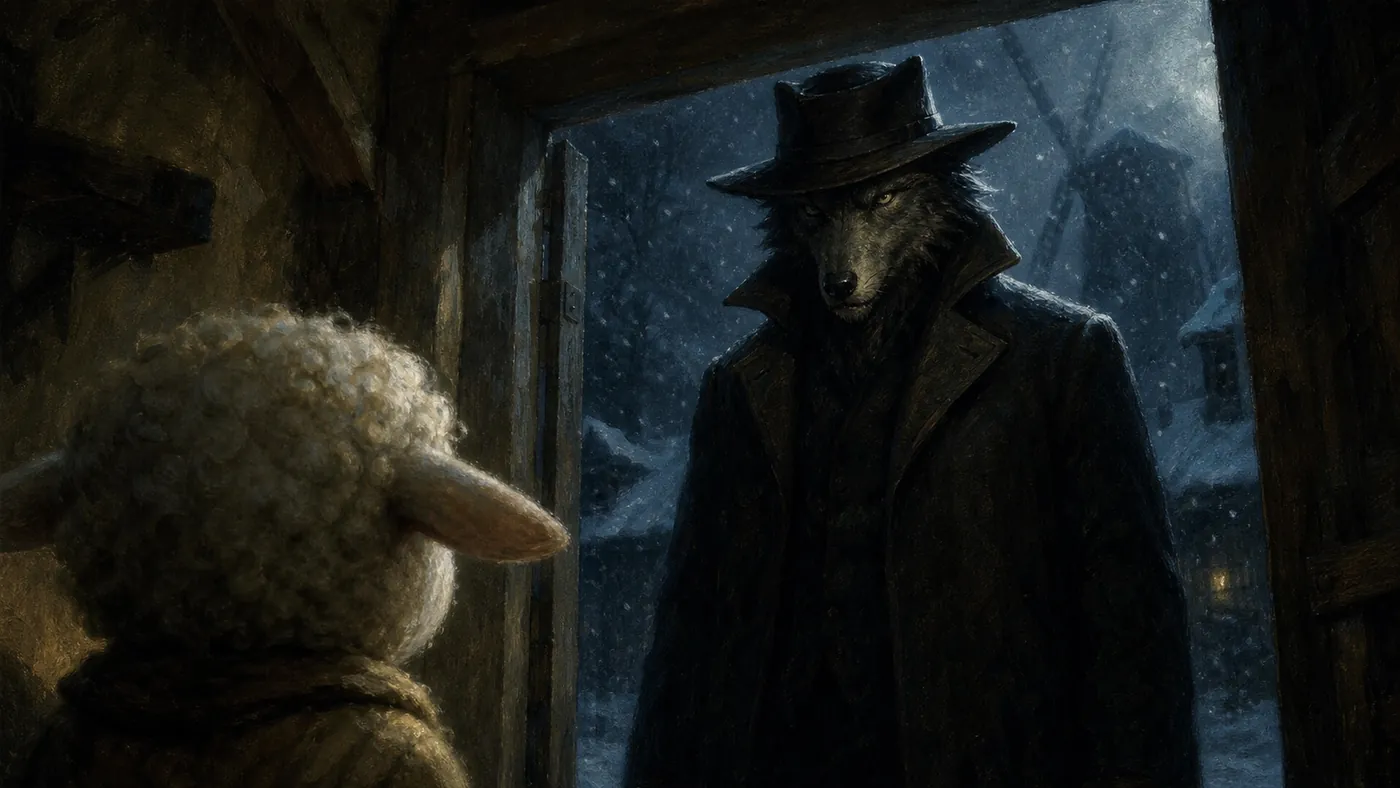
“Mr. Marlow?”